
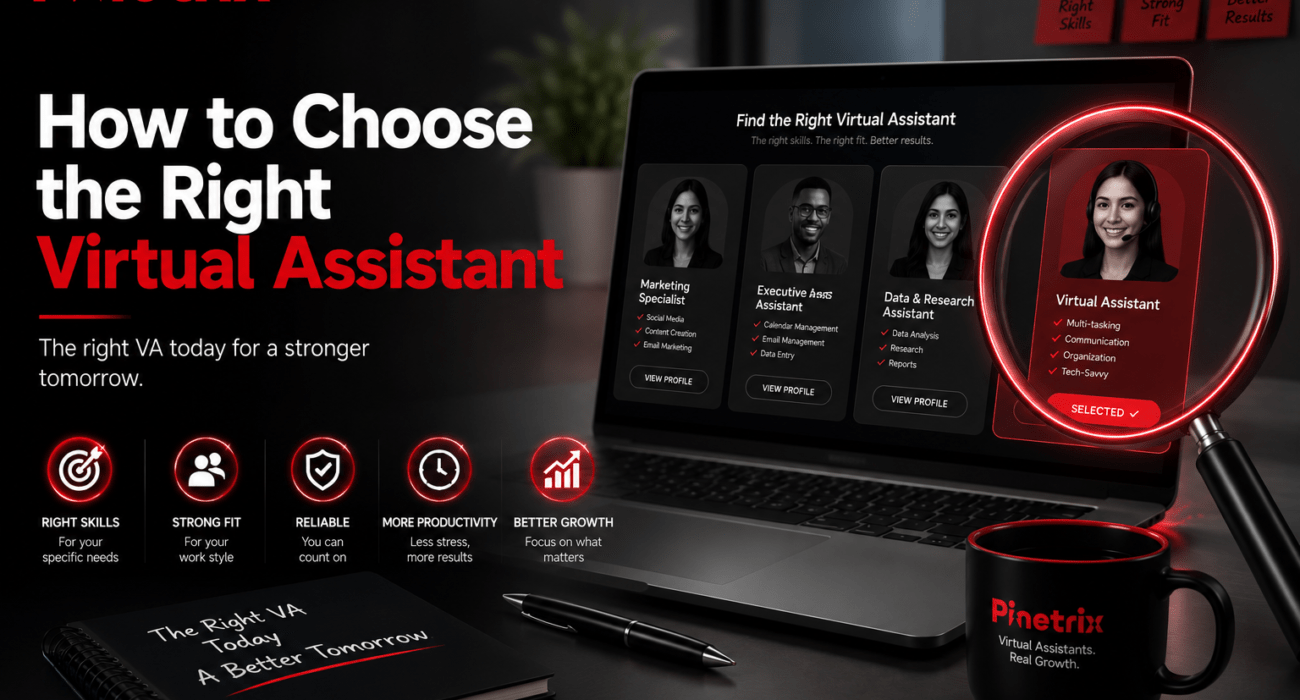
Hiring the right virtual assistant can significantly improve your business operations, increase productivity, and free up valuable time for strategic growth. However, choosing the wrong assistant can lead to communication challenges, inconsistent work quality, security concerns, and unnecessary operational costs.
Not every virtual assistant has the same skills, experience, or industry knowledge. Some specialize in administrative support, while others excel in customer service, lead generation, e-commerce management, marketing, or industry-specific operations. The key is finding a virtual assistant whose expertise aligns with your business goals and daily operational requirements.
Whether you’re a startup looking to reduce administrative workload or a growing business planning to scale efficiently, selecting the right virtual assistant requires more than simply comparing prices. You need to evaluate experience, technical skills, communication, reliability, and the ability to grow alongside your business.
In this guide, you’ll learn the essential factors to consider before hiring a virtual assistant, common mistakes to avoid, and practical tips to help you choose the right business support solution.
Choosing the Right Virtual Assistant at a Glance
Before hiring a virtual assistant, evaluate these key areas:
- Clearly define the tasks you want to outsource.
- Look for relevant industry experience.
- Assess communication and organizational skills.
- Verify technical proficiency with your business tools.
- Prioritize data security and confidentiality.
- Choose a solution that can scale with your business.
- Consider long-term value instead of selecting solely based on price.
A structured hiring process helps you find a right virtual assistant who can integrate smoothly into your business and deliver consistent, high-quality support.
Identify Your Business Needs First
Before searching for a virtual assistant, identify exactly which tasks consume the most time within your business. Understanding your operational needs makes it easier to find someone with the right expertise and ensures you invest in support that delivers measurable value.
Many businesses begin by outsourcing repetitive administrative work before expanding into more specialized responsibilities as their operations grow.
Common business functions that can be outsourced include:
- Administrative support
- Email and calendar management
- Customer service and customer support
- Lead generation and CRM management
- Data entry and documentation
- E-commerce operations
- Online research
- Social media support
- Appointment scheduling
- Back-office operations
Creating a clear list of responsibilities before hiring not only simplifies the selection process but also helps establish expectations, improve onboarding, and measure performance more effectively.
Expert Tip: Instead of outsourcing everything at once, begin with repetitive, time-consuming tasks. Once your virtual assistant understands your workflows, gradually delegate higher-value responsibilities such as customer support, lead generation, or operational management.
Define the Skills You Need
A successful virtual assistant does more than complete assigned tasks—they contribute to smoother business operations through strong communication, organization, and problem-solving abilities. Before hiring, identify the skills that are essential for your business rather than looking for someone who can do everything.
Some of the most valuable skills to look for include:
- Communication Skills: Clear, professional communication helps prevent misunderstandings and keeps projects on track.
- Organization and Time Management: A well-organized virtual assistant can prioritize tasks, meet deadlines, and manage multiple responsibilities efficiently.
- Problem-Solving Ability: The ability to identify issues and recommend practical solutions reduces the need for constant supervision.
- Attention to Detail: Accuracy is essential when managing customer information, documentation, scheduling, and business records.
- Technical Proficiency: Familiarity with CRM platforms, project management software, communication tools, and cloud-based applications helps virtual assistants integrate into existing workflows quickly.
- Adaptability: Businesses evolve over time, so choosing someone who can learn new processes and adjust to changing priorities is a valuable long-term investment.
The ideal skill set will vary depending on your business goals. For example, a company focused on customer service may prioritize communication skills, while an e-commerce business may need experience with online marketplaces and inventory management.
Look for Relevant Experience
Experience is one of the strongest indicators of a virtual assistant’s ability to deliver consistent, high-quality work. While technical skills can be learned, practical experience often leads to faster onboarding, fewer mistakes, and a better understanding of business processes.
When evaluating candidates or service providers, consider the following:
- Industry Experience: Has the virtual assistant worked with businesses similar to yours?
- Service Expertise: Do they specialize in the tasks you need, such as administrative support, customer service, lead generation, or e-commerce operations?
- Software Knowledge: Are they familiar with the tools your business already uses?
- Client Success Stories: Testimonials, reviews, or case studies can provide insight into their reliability and work quality.
- Process Understanding: Experienced virtual assistants are often comfortable following standard operating procedures (SOPs) and adapting to established workflows.
While previous experience is valuable, don’t focus solely on the number of years someone has worked. A virtual assistant with relevant expertise and a structured approach may deliver better results than someone with broader but less focused experience.
Evaluate Communication and Collaboration
Effective communication is one of the most important qualities of a successful virtual assistant. Even highly skilled professionals can struggle to deliver results if expectations are unclear or communication is inconsistent.
Before hiring, evaluate how the virtual assistant communicates during the selection process. Consider factors such as responsiveness, professionalism, clarity, and willingness to ask questions.
Key areas to assess include:
- Response time to emails and messages
- Professional and courteous communication
- Ability to understand instructions accurately
- Confidence in written and verbal communication
- Availability during your preferred working hours
- Willingness to provide regular progress updates
A virtual assistant who communicates proactively is more likely to identify potential issues early, keep projects moving, and collaborate effectively with your team.
Expert Tip: Schedule a short discovery call before making a hiring decision. A conversation often reveals communication style, professionalism, and problem-solving ability more effectively than a resume or portfolio alone.
Assess Technical Skills and Tool Proficiency
Modern businesses rely on a variety of digital tools to manage communication, projects, customer relationships, and daily operations. Choosing a right virtual assistant who is already familiar with these platforms can significantly reduce onboarding time and improve productivity from day one.
When evaluating a virtual assistant, consider their experience with the tools your business uses regularly. While every organization has different workflows, proficiency with common business software is a strong indicator of adaptability and efficiency.
Some commonly used business tools include:
| Category | Examples |
| Communication | Microsoft Teams, Slack, Zoom, Google Meet |
| Email & Productivity | Gmail, Outlook, Google Workspace, Microsoft 365 |
| Project Management | Asana, Trello, ClickUp, Monday.com |
| CRM Platforms | HubSpot, Salesforce, Zoho CRM, Pipedrive |
| E-commerce | Shopify, WooCommerce, Amazon Seller Central |
| File Management | Google Drive, OneDrive, Dropbox |
A virtual assistant doesn’t need to know every platform, but they should demonstrate the ability to learn new tools quickly and integrate smoothly into your existing workflows.
Prioritize Data Security and Confidentiality
Virtual assistants often have access to sensitive business information, including customer records, financial documents, internal communications, and CRM data. Protecting this information should be a key consideration during the hiring process.
Before working with a virtual assistant or service provider, ensure they follow secure business practices such as:
- Signing non-disclosure agreements (NDAs) when required.
- Using secure password management practices.
- Accessing business accounts through approved systems and permissions.
- Following company policies for handling confidential information.
- Using secure cloud storage and file-sharing platforms.
- Maintaining regular backups and access controls where applicable.
Establishing clear security protocols from the beginning helps protect your business while building trust between both parties.
Business Insight: Strong security practices are just as important as technical skills. A reliable virtual assistant should understand the importance of protecting confidential business information and following established security procedures.
Choose a Virtual Assistant That Can Scale With Your Business
Your business needs today may look very different six or twelve months from now. While you may initially require help with administrative tasks, future growth could create demand for customer support, lead generation, e-commerce management, or additional back-office operations.
Choosing a scalable virtual assistant service gives your business the flexibility to expand support without repeating the hiring process or disrupting existing workflows.
When evaluating providers, ask yourself:
- Can they provide additional support as my business grows?
- Do they offer specialists for different business functions?
- Can they handle seasonal increases in workload?
- Do they have standardized processes and quality control?
- Will they continue supporting my business as operational requirements evolve?
Working with a scalable service provider allows businesses to adapt quickly while maintaining consistent service quality and operational efficiency.
By planning for future growth not just current requirements you can build a long-term partnership that supports your business at every stage of its journey.
Questions to Ask Before Hiring a Virtual Assistant
Choosing the right virtual assistant isn’t just about reviewing resumes or comparing pricing. Asking the right questions during the hiring process helps you understand whether a candidate or service provider is the right fit for your business.
Consider asking the following questions before making your decision:
| Question | Why It Matters |
| What industries have you worked with? | Evaluates relevant business experience. |
| Which services do you specialize in? | Ensures their expertise matches your requirements. |
| Which software and business tools are you familiar with? | Confirms compatibility with your existing workflows. |
| How do you communicate and provide project updates? | Sets clear expectations for collaboration. |
| How do you protect confidential business information? | Assesses their approach to security and data privacy. |
| Can your services scale as my business grows? | Helps determine long-term suitability. |
The answers to these questions provide valuable insight into a virtual assistant’s experience, professionalism, and ability to support your business effectively.
Common Mistakes to Avoid When Hiring a Virtual Assistant
Many businesses focus only on cost when hiring a virtual assistant, but choosing the wrong provider can lead to communication issues, inconsistent work quality, and lost productivity. Avoiding these common mistakes can help you build a successful long-term working relationship.
Hiring Based Only on Price
The lowest-cost option isn’t always the best value. Consider experience, communication, reliability, and service quality rather than making your decision based solely on price.
Failing to Define Responsibilities
Without clear expectations, even experienced virtual assistants may struggle to deliver the results you expect. Create a list of responsibilities, priorities, and performance expectations before work begins.
Skipping the Onboarding Process
A structured onboarding process helps virtual assistants understand your workflows, business goals, communication preferences, and company procedures. Investing time upfront often leads to better long-term results.
Ignoring Communication Expectations
Establish preferred communication channels, response times, reporting schedules, and availability from the beginning to prevent misunderstandings.
Overlooking Data Security
Virtual assistants frequently handle sensitive business information. Ensure appropriate security measures, access controls, and confidentiality agreements are in place before sharing business systems or customer data.
Expert Tip: Consider starting with a small project or trial period before assigning larger responsibilities. This allows you to evaluate communication, work quality, and compatibility while minimizing risk.
Why Businesses Choose Professional Virtual Assistant Services
While freelancers can be a suitable option for individual projects, many growing businesses prefer professional virtual assistant service providers that offer structured processes, trained professionals, and the flexibility to scale support as operational needs evolve.
Professional providers typically offer:
- Access to experienced virtual assistants with specialized expertise.
- Standardized workflows and quality assurance processes.
- Reliable business continuity and ongoing support.
- Flexible solutions that scale with business growth.
- Secure processes for handling confidential business information.
At Pinetrix, we provide tailored virtual assistant services designed to support businesses across multiple industries. From administrative support and customer service to lead generation, back-office operations, and e-commerce assistance, our experienced professionals help organizations improve efficiency while maintaining consistent service quality.
Conclusion
Choosing the right virtual assistant is about more than filling a role, it’s about finding a trusted business partner who can support your daily operations and contribute to your long-term success. By clearly defining your business needs, evaluating relevant experience, assessing communication and technical skills, and prioritizing security and scalability, you can make a confident hiring decision.
Whether you’re outsourcing administrative work, customer support, lead generation, or specialized business functions, the right virtual assistant can help improve productivity, streamline operations, and free your team to focus on strategic growth.
If you’re looking for reliable virtual assistant services, Pinetrix provides experienced professionals who deliver flexible business support tailored to your operational needs. Our solutions are designed to help businesses work more efficiently, improve customer experiences, and scale with confidence.
Frequently Asked Questions
How do I choose the right virtual assistant?
Start by identifying the tasks you want to outsource, then evaluate candidates based on relevant experience, communication skills, technical expertise, security practices, and their ability to scale with your business as your needs evolve.
What skills should a virtual assistant have?
A professional virtual assistant should have strong communication, organization, time management, attention to detail, problem-solving abilities, and proficiency with common business tools such as CRM systems, project management software, and collaboration platforms.
Should I hire a freelancer or a virtual assistant service provider?
The right choice depends on your business needs. Freelancers may be suitable for short-term or specialized projects, while professional virtual assistant service providers typically offer structured processes, broader expertise, backup support, and greater scalability for long-term business growth.
How much experience should a virtual assistant have?
There is no fixed requirement, but choosing someone with experience relevant to your industry and the specific tasks you plan to outsource generally leads to faster onboarding and better results.
What should I ask before hiring a virtual assistant?
Ask about their industry experience, areas of specialization, familiarity with your business tools, communication process, data security practices, availability, and ability to support your business as it grows.