
Introduction
Choosing the right website development company is not just a technical decision; it is a business decision. Your website influences how customers perceive your brand, how easily they find information, and whether they take action. The right development partner helps create a website that supports customer trust, marketing efforts, and long-term business growth.
However, selecting a development partner is not only about finding someone who can create an attractive design. A successful website requires a combination of strategic planning, user experience, technical expertise, performance optimization, security, and future scalability.
Many businesses choose a website development company based only on price or visual design. While these factors are important, they do not always determine whether a website will deliver business results. A website that looks good but loads slowly, provides a poor mobile experience, or lacks proper technical foundations can negatively affect user trust and growth opportunities.
The right website development company should understand your business goals, target audience, and long-term requirements. They should help you build a website that is easy to use, technically reliable, and designed to achieve measurable objectives.
How to Choose the Right Website Development Company? (Quick Answer)
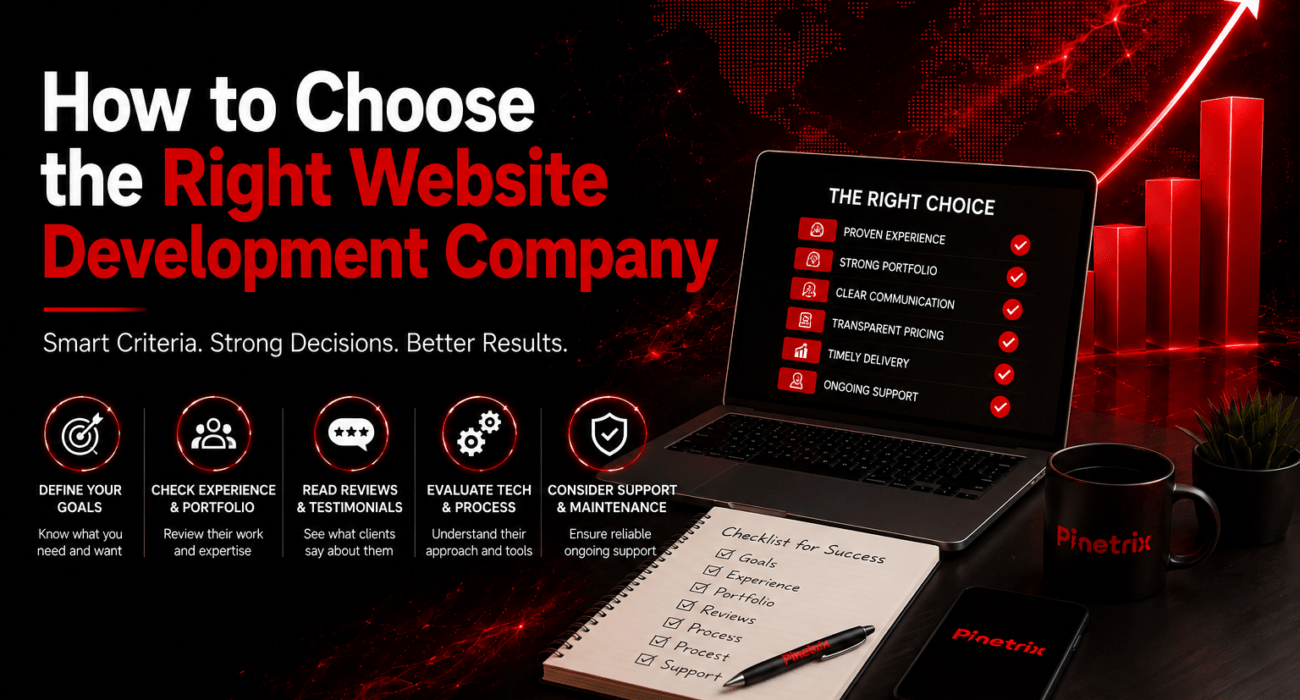
The right website development company should have relevant experience, a proven portfolio, a clear development process, strong technical knowledge, and an understanding of your business goals. Before hiring, evaluate how they approach design, performance, SEO, security, communication, and long-term support.
A reliable website development company should focus on:
- Understanding your business objectives
- Creating a strong user experience
- Building a technically optimized website
- Supporting future growth
- Providing transparent communication
Website Development Company Evaluation Framework
Before choosing a development partner, evaluate them across these areas:
| Area | What to Check |
| Strategy | Do they understand your business goals? |
| Experience | Have they built similar websites? |
| Technology | Can they recommend the right solution? |
| User Experience | Is the website designed for customers? |
| Performance | Is it fast and scalable? |
| Support | Will they help after launch? |
Why Choosing the Right Website Development Company Matters
Your website is often the first place where potential customers interact with your business. Before contacting you or making a purchase decision, users usually evaluate whether your website looks professional, trustworthy, and easy to use.
A poor website experience can create problems such as:
- Visitors leaving before contacting your business
- Lower customer trust
- Difficulty ranking in search engines
- Expensive redesigns in the future
- Limited ability to add new features
A well-developed website, on the other hand, can help businesses:
- Build credibility
- Generate qualified leads
- Improve customer experience
- Support marketing campaigns
- Create a stronger online presence
This is why businesses should choose a development partner based on long-term value rather than only focusing on the initial cost.
Many businesses later invest in redesigns because their original website was built without considering scalability, performance, or future business needs.
1. Define Your Website Goals Before Hiring a Development Company
Before searching for a website development company, the first step is understanding what you want your website to achieve.
Many businesses begin the process by asking:
“How much does a website cost?”
A better question is:
“What business goal should this website help us achieve?”
Your goals will influence everything from website structure and design to required features and technology choices.
2. Identify the Main Purpose of Your Website
Different businesses need websites for different reasons.
Lead Generation
If your goal is to attract potential customers, your website may require:
- Service-focused pages
- Clear calls-to-action
- Contact forms
- Landing pages
- Trust-building elements such as reviews and case studies
E-commerce Sales
An online store requires different functionality, such as:
- Product management
- Secure payments
- Shopping cart functionality
- Order tracking
- Inventory management
Brand Authority
Businesses focused on building credibility may need:
- Professional design
- Educational content
- Case studies
- Customer testimonials
- Industry expertise signals
3. Understand Your Target Audience
A website should be built around the people who will use it.
Before hiring a development company, consider:
- Who are your customers?
- What information do they need?
- What problems are they trying to solve?
- What action should they take on your website?
For example:
A software company may need detailed service pages, technical information, and demo request options.
A local service business may need location details, customer reviews, and simple inquiry options.
A professional development company should understand these factors before recommending design, technology, or features. A good website starts with understanding users, not just choosing colors and layouts.
4. Decide What Features Your Business Actually Needs
One common mistake businesses make is adding features because competitors have them.
Instead, focus on features that support your goals.
Some common website requirements include:
- Content management system (CMS)
- Blog functionality
- Contact forms
- Booking systems
- Customer portals
- Payment integration
- CRM integration
- Analytics tracking
The right website development company should recommend features based on your business requirements instead of adding unnecessary complexity.
Practical Example
Imagine two businesses hiring a website development company.
Business A:
- Wants a website because competitors have one
- Focuses only on appearance
- Has no clear customer journey
Business B:
- Understands its target audience
- Defines business goals
- Plans required features before development
Business B is more likely to receive a website that supports growth because the development process starts with strategy.
5. Compare Website Development Companies Based on Value
When comparing website development companies, many businesses focus mainly on price. While budget is important, choosing the cheapest option is not always the best decision.
A website is a long-term business investment. A low-cost solution may save money initially but create additional expenses later due to:
- Poor performance
- Limited customization
- Security issues
- Difficult maintenance
- Expensive redesign requirements
Instead of asking:
“Which company offers the lowest price?”
Ask:
“Which company can provide the best value for my business goals?”
The right development partner should help you build a website that supports your customers, marketing efforts, and future growth.
Website Development Company Comparison Checklist
| Factor | What to Evaluate |
| Experience | Similar projects and industry knowledge |
| Technical Skills | Development expertise and technology choices |
| Process | Planning, testing, and communication approach |
| SEO Understanding | Technical structure and performance |
| Support | Maintenance and future improvements |
6. Understand Website Development Pricing
Website development costs vary depending on the complexity and requirements of each project.
Factors that influence pricing include:
- Number of pages
- Custom design requirements
- Website functionality
- Third-party integrations
- Content needs
- Security requirements
- Ongoing maintenance
A professional website proposal should clearly explain:
- What is included
- Project timeline
- Features being developed
- Future support options
Why Extremely Low Pricing Can Be Risky
A very low-cost website may look attractive, but businesses sometimes face problems after launch:
- The website cannot support new features
- Updates require constant developer help
- Performance issues appear
- The website structure is difficult to optimize
A better approach is choosing a company that provides long-term value rather than only a low initial price.
7. Evaluate Their Website Development Process
A professional website development company should follow a structured process. A clear process reduces mistakes and ensures the final website matches business requirements.
Step 1: Discovery and Planning
Before development begins, the company should understand:
- Business goals
- Target audience
- Required features
- Competitors
- Website objectives
Proper planning helps avoid unnecessary changes later.
Step 2: Design and User Experience
A good website design is not only about appearance.
It should focus on:
- Easy navigation
- Mobile responsiveness
- Clear information structure
- User-friendly experience
- Conversion opportunities
The goal is to help visitors quickly find information and take the desired action.
Step 3: Development and Testing
During development, the company should focus on:
- Clean code
- Website functionality
- Security
- Performance
- Browser compatibility
Before launch, testing should be performed to identify issues related to:
- Mobile experience
- Website speed
- Forms
- Links
- User interactions
8. Communication and Collaboration
Communication is an important factor that many businesses overlook when hiring a website development company.
A technically skilled team can still create problems if project communication is unclear.
Before hiring, ask:
- Who will manage communication?
- How often will progress updates be shared?
- How will feedback be handled?
- How will changes be managed?
Signs of Good Communication
A reliable development partner:
- Explains technical details clearly
- Provides regular updates
- Sets realistic expectations
- Documents important decisions
- Responds professionally
Why Collaboration Matters
The best websites are created when businesses and developers work together.
The business provides:
- Industry knowledge
- Customer insights
- Business goals
The development team provides:
- Technical expertise
- User experience solutions
- Implementation knowledge
This collaboration helps create a website that solves real business problems instead of just looking good.
9. Make Sure the Website Is SEO-Friendly
SEO should not be considered only after a website is developed. A website’s structure, performance, and technical setup can influence how easily search engines understand and index its content.
A website development company does not need to replace an SEO specialist, but they should understand important SEO foundations that support future optimization.
A search-friendly website should focus on:
- Clear website structure
- Mobile responsiveness
- Fast loading speed
- Proper HTML structure
- Optimized images
- Technical SEO basics
Why Development and SEO Work Together
Website performance directly affects user experience. Slow-loading websites can increase user frustration and make visitors more likely to leave, which makes speed optimization an important part of modern website development.
A business can create excellent content and invest in marketing, but if the website has technical issues, results can be limited.
For example:
- Slow pages can frustrate visitors
- Poor structure can make content harder to understand
- Mobile issues can reduce user engagement
A good development partner builds a strong technical foundation so SEO efforts can perform better in the future.
10. Check Website Security and Post-Launch Support
A website launch is not the end of the development process. Websites require regular updates, security checks, and improvements to remain effective.
Before hiring a company, understand what support they provide after launch.
A reliable website development company should consider:
| Security Area | Why It Matters |
| SSL Certificate | Protects user communication |
| Secure Development | Reduces security risks |
| Updates | Keeps systems protected |
| Backups | Helps recover data when needed |
| Access Control | Protects website management |
Why Ongoing Support Matters
After launch, businesses often need:
- New pages
- Feature improvements
- Content updates
- Performance optimization
- Technical fixes
A development partner that provides ongoing support can help your website continue improving as your business grows.
Red Flags When Hiring a Website Development Company
Choosing the wrong development company can lead to wasted time and additional costs. Before making a decision, watch for these warning signs.
-
No Clear Development Process
A professional company should explain:
- How requirements are collected
- How projects are planned
- How testing is performed
- How launch is managed
A lack of process often leads to confusion and delays.
-
Focus Only on Design
A good-looking website is important, but design alone does not create business results.
A strong website also needs:
- Good performance
- Security
- SEO-friendly structure
- User-focused experience
-
Unrealistic Promises
Be careful with companies promising instant results, such as:
- Immediate rankings
- Guaranteed traffic growth
- Extremely fast development without proper planning
Quality websites require strategy, development, testing, and continuous improvement.
-
No Clear Ownership Details
Before starting a project, confirm:
- Who owns the website?
- Will you receive all access details?
- Can your team manage the website later?
Your website should remain a valuable business asset that you control.
5. No Understanding of Business Goals
A development company should understand your customers, objectives, and challenges before recommending solutions. If they immediately focus on design and pricing without understanding your business, the final website may not support your actual goals.
Final Checklist Before Hiring a Website Development Company
Before choosing a development partner, make sure:
- They understand your business goals
- They have relevant experience
- Their portfolio shows problem-solving ability
- They understand performance and security
- They follow a clear development process
- They communicate transparently
- They provide post-launch support
- They build websites that can grow with your business
Final Thoughts
Choosing the right website development company is about finding a partner who understands your business, customers, and long-term goals.
The best website development partner does not only create a website. They create a digital solution that combines:
- Strategy
- User experience
- Technology
- Performance
- Security
- Scalability
Before making your decision, evaluate companies carefully, ask the right questions, and choose a partner that focuses on creating long-term value.
Build a Website That Supports Your Business Growth
At Pinetrix, we help businesses build professional websites with a focus on user experience, performance, scalability, and business growth. Our website development approach combines modern technology with solutions designed around your specific goals.
If you are looking for a website development partner that understands both technology and business requirements, Pinetrix can help you create a solution aligned with your objectives.
Contact Pinetrix today to discuss your website development requirements.