
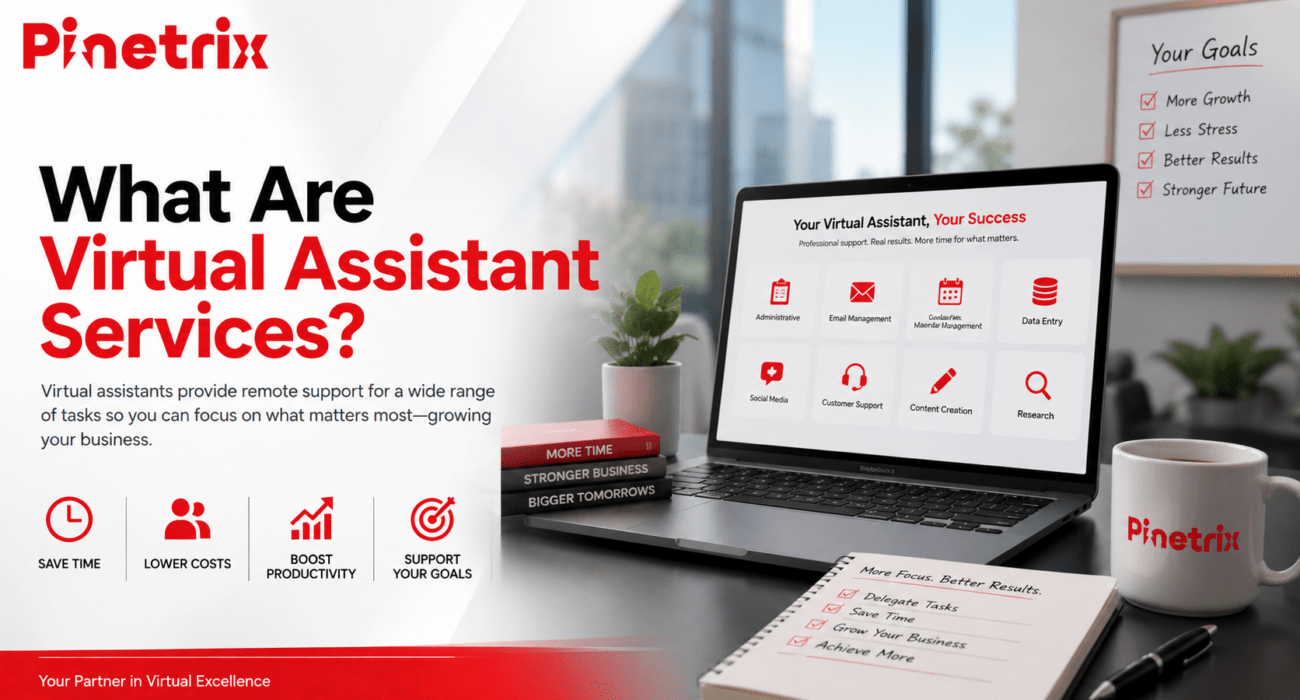
Virtual assistant services are remote business support solutions that help companies manage administrative, operational, customer service, and specialized tasks without hiring additional in-house staff. By delegating routine and time-consuming responsibilities to skilled professionals, businesses can improve productivity, reduce operational costs, and focus on strategic growth.
Running a business involves much more than delivering products or services. Business owners and managers often spend significant time responding to emails, scheduling meetings, handling customer inquiries, updating CRM systems, organizing documents, and managing day-to-day operations. While these tasks are essential, they can limit the time available for business development, customer relationships, and long-term planning.
Virtual assistant services solve this challenge by providing experienced remote professionals who support businesses across a wide range of functions. Whether you need help with administrative work, customer support, lead generation, e-commerce operations, or workflow management, a virtual assistant can become a valuable extension of your team.
From startups and small businesses to growing enterprises, organizations across industries rely on virtual assistant services to improve operational efficiency while maintaining the flexibility to scale as their business grows.
Virtual Assistant Services at a Glance
Virtual assistant services provide businesses with professional remote support for a variety of operational and administrative functions. Companies commonly hire virtual assistants to:
- Manage emails and calendars
- Handle customer service and customer support
- Update CRM systems and business databases
- Generate and qualify leads
- Support e-commerce operations
- Conduct online research
- Prepare reports and documentation
- Organize daily business workflows
By outsourcing these responsibilities, businesses can increase productivity, improve operational efficiency, and allow internal teams to focus on higher-value work.
What Does a Virtual Assistant Do?
A virtual assistant performs a wide range of business tasks that help organizations operate more efficiently. The exact responsibilities depend on the company’s industry, business goals, and operational needs. While some virtual assistants focus on administrative support, others specialize in customer service, lead generation, digital marketing, e-commerce, or industry-specific operations.
By managing routine and time-consuming work, virtual assistants free up business owners and internal teams to focus on strategic planning, client relationships, and revenue-generating activities. This not only improves productivity but also helps businesses maintain smoother day-to-day operations.
Common Virtual Assistant Tasks
The responsibilities of a virtual assistant can vary, but most businesses outsource tasks that are repetitive, administrative, or require consistent daily management.
| Virtual Assistant Task | How It Benefits Your Business |
| Email Management | Organizes inboxes, prioritizes important messages, and improves communication efficiency. |
| Calendar & Appointment Scheduling | Coordinates meetings, schedules appointments, and prevents scheduling conflicts. |
| Administrative Support | Handles documentation, data entry, file management, and other routine office tasks. |
| Customer Support | Responds to customer inquiries via email, chat, or phone to improve customer satisfaction. |
| CRM Management | Updates customer records, manages sales pipelines, and tracks follow-ups. |
| Lead Generation | Researches prospects, builds lead lists, and supports business development efforts. |
| Online Research | Gather market insights, competitor information, and business data for informed decision-making. |
| E-commerce Support | Manages product listings, inventory updates, order processing, and customer communication. |
| Social Media Assistance | Schedules posts, monitors engagement, and supports content publishing. |
| Reporting & Documentation | Creates reports, organizes business records, and maintains accurate documentation. |
Expert Tip: If you’re hiring a virtual assistant for the first time, start by outsourcing repetitive tasks such as email management, scheduling, and data entry. Once efficient workflows are established, you can gradually delegate more specialized responsibilities like customer support, CRM management, lead generation, or e-commerce operations.
Common Types of Virtual Assistant Services
Virtual assistant services extend far beyond administrative work. Depending on your business requirements, you can outsource a variety of operational and specialized functions to experienced professionals. Choosing the right type of virtual assistant ensures you receive the expertise needed to support your business goals.
Some of the most common virtual assistant services include:
- Administrative Support: Email management, scheduling, document preparation, data entry, and day-to-day administrative tasks.
- Customer Support: Managing customer inquiries through email, live chat, and phone support while improving response times.
- Lead Generation & Sales Support: Prospect research, CRM management, appointment setting, and sales pipeline support.
- E-commerce Support: Product listing management, inventory updates, order processing, marketplace management, and customer communication.
- Marketing Support: Social media management, content scheduling, email marketing assistance, and campaign coordination.
- Industry-Specific Support: Specialized services for healthcare, finance, real estate, legal, SaaS, and other industries.
As your business grows, virtual assistant services can scale alongside your operations, providing flexible support without the cost and complexity of hiring additional in-house staff.
Benefits of Virtual Assistant Services
Hiring a virtual assistant is more than simply delegating routine work, it’s a strategic decision that helps businesses improve efficiency, optimize resources, and support long-term growth. By outsourcing repetitive tasks, business owners and employees can dedicate more time to innovation, customer relationships, and revenue-generating activities.
Increased Productivity
Administrative work can consume a significant portion of the workday. A virtual assistant takes ownership of these routine responsibilities, allowing your team to focus on strategic initiatives, business development, and delivering better customer experiences.
Lower Operational Costs
Hiring a full-time employee often involves additional expenses such as recruitment, onboarding, office space, equipment, and employee benefits. Virtual assistant services provide professional support without many of these overhead costs, making them a cost-effective solution for businesses of all sizes.
Access to Specialized Skills
Many virtual assistants specialize in areas such as customer support, CRM management, lead generation, digital marketing, e-commerce operations, finance, and administrative support. This allows businesses to access the expertise they need without investing in lengthy hiring or training processes.
Greater Flexibility and Scalability
Business needs can change quickly. Virtual assistant services offer the flexibility to increase or reduce support based on workload, seasonal demand, or business growth. This scalability helps organizations remain agile while controlling operational costs.
Improved Customer Experience
Fast response times and consistent communication are essential for customer satisfaction. Virtual assistants can manage customer inquiries, schedule appointments, process requests, and provide ongoing support, helping businesses deliver a better overall customer experience.
Business Insight: Companies that outsource repetitive operational tasks often improve team productivity because employees can focus on high-impact work instead of routine administrative responsibilities.
Virtual Assistant vs. In-House Employee
Businesses often compare hiring a virtual assistant with recruiting an in-house employee. While both options have advantages, virtual assistant services offer greater flexibility for organizations looking to reduce operational costs and scale efficiently.
| Factor | Virtual Assistant | In-House Employee |
| Work Location | Remote | Office-based |
| Hiring Process | Faster onboarding | Longer recruitment process |
| Operational Costs | Lower overhead costs | Higher expenses for workspace, equipment, and employee benefits |
| Flexibility | Scale support as business needs change | Fixed working hours and responsibilities |
| Specialized Expertise | Access to professionals with diverse skill sets | Usually hired for a specific role |
| Scalability | Easy to increase or reduce support | Often requires additional hiring |
For many startups, small businesses, and growing organizations, virtual assistant services provide a practical way to access professional support while maintaining operational flexibility.
How to Choose the Right Virtual Assistant Service
Selecting the right virtual assistant service is an important business decision. A reliable provider should not only have the required skills but also integrate smoothly with your existing workflows and business objectives.
When evaluating virtual assistant services, consider the following:
- Industry Experience: Choose professionals who understand your business sector and operational requirements.
- Communication Skills: Effective communication is essential for seamless collaboration and project success.
- Technical Expertise: Ensure the virtual assistant is familiar with the software and tools your business uses, such as CRM platforms, project management systems, and communication tools.
- Data Security: Verify that the provider follows secure processes to protect sensitive business information.
- Scalability: Select a service that can adapt as your business grows and your support requirements change.
- Client Reviews: Testimonials, case studies, and customer feedback can help you evaluate reliability and service quality.
The right virtual assistant should function as an extension of your team, helping improve productivity, maintain operational efficiency, and support long-term business growth.
Conclusion
Virtual assistant services have become an essential business solution for organizations looking to improve productivity, streamline operations, and support sustainable growth. From managing administrative responsibilities and customer support to assisting with lead generation, CRM management, and e-commerce operations, virtual assistants help businesses operate more efficiently while allowing internal teams to focus on strategic priorities.
Whether you’re a startup aiming to maximize limited resources or an established business looking to scale without increasing operational overhead, outsourcing the right tasks can improve efficiency, reduce costs, and create more opportunities for growth.
At Pinetrix, we provide professional virtual assistant services tailored to your unique business requirements. Our experienced team supports businesses with administrative assistance, customer support, lead generation, back-office operations, e-commerce support, and other essential business functions, helping organizations improve operational efficiency and scale with confidence.
If you’re ready to optimize your business operations, explore our Virtual Assistant Services to discover how Pinetrix can support your growth.
Let’s Grow Your Business Together!
Frequently Asked Questions
What are virtual assistant services?
Virtual assistant services provide businesses with professional remote support for administrative, operational, customer service, and specialized business tasks. They help organizations improve productivity, reduce operational costs, and focus on strategic business activities without hiring additional in-house staff.
What tasks can a virtual assistant handle?
A virtual assistant can manage a wide range of business responsibilities, including:
- Email and calendar management
- Customer support
- CRM management
- Lead generation
- Data entry
- Online research
- Appointment scheduling
- E-commerce support
- Social media assistance
- Reporting and documentation
The exact responsibilities depend on your business needs and the level of support required.
Are virtual assistant services only for small businesses?
No. Virtual assistant services are suitable for businesses of all sizes, including startups, small and medium-sized businesses (SMEs), and large enterprises. Many growing organizations use virtual assistants to improve operational efficiency, support business expansion, and access specialized expertise without increasing overhead costs.
How do virtual assistant services help businesses save money?
Virtual assistants help businesses reduce expenses associated with hiring full-time employees, such as recruitment, onboarding, office space, equipment, and employee benefits. They also allow businesses to pay for the support they need while maintaining greater flexibility as workloads change.
How do I choose the right virtual assistant service provider?
When selecting a virtual assistant service provider, consider factors such as:
- Industry experience
- Communication skills
- Technical expertise
- Data security practices
- Scalability
- Client reviews and reputation
A reliable provider should understand your business goals, integrate with your existing workflows, and deliver consistent, high-quality support.
Why choose Pinetrix for virtual assistant services?
Pinetrix provides flexible virtual assistant solutions designed to support businesses across a variety of industries. Our experienced professionals assist with administrative tasks, customer support, lead generation, e-commerce operations, and back-office processes, enabling businesses to improve efficiency while focusing on growth and long-term success.